
Varför hatar folk MP?
Rataxes skrev 2021-04-20 12:26:41 följande:
MP-sektens senaste taltratt berättar om sin uppväxt:
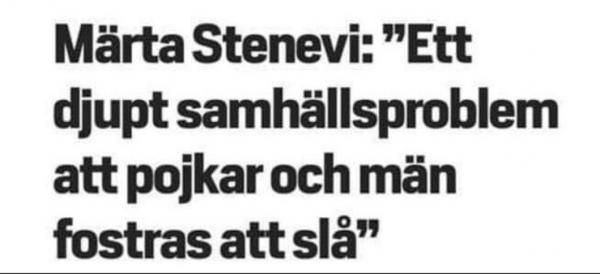
Jag vet inte vilken sorts familjer miljöpartiets medlemmar växer upp i, men uppenbarligen är taltrattens uppväxtmiljö väldigt olik min.
De har haft snälla empatiska föräldrar som klappat händerna och bjudit på glass varje gång de svarat på en fråga, även om svaret var helt fel. Som vuxna kan de bli lite kränkt om någon inte håller med så de trivs bäst i en ekokammare, de gjort samma sak som sina föräldrar om någon haft rätt åsikt, även om den var helt korkad.
Ju mindre man vet ju vet man om man hur lite man vet så det kan ju bli svår kollektiv dunning kruger om det blir för många korkade experter med rätt åsikt i en ekokammare.
KlantSmurfen skrev 2021-04-21 12:06:55 följande:
Man gjort våldet till en industri där man kan ha yrkerkena låtsasforskare, låtsas expert på strukturer, genusnormer och pojkars brist på empati, yrkesfeminist med offerskapet som inkomstkälla. Man kan också vara omtänksam empatisk politiker som pratar om dumma män eller hatisk bloggare som använder 'kvinnohat' och 'patriarkat' som ursäkt för sitt patetiska beteende. Ska man lägga skulden där den hör hemma får man räkna med de som lägger vantarna på resururser och är en bromskloss i det våldsförebyggande arbetet.
MP: Så stoppar vi våldet mot kvinnorna | Aftonbladet Debatt (2021-04-19/2021-04-19)
DEBATT. Det är nog nu. På några få veckor har fem kvinnor mördats. De män som slår och mördar måste mötas av samhällets samlade kraft.
[...]
Rättsväsendet måste prioritera mäns våld mot kvinnor högre
Polis och åklagare behöver prioritera mäns våld mot kvinnor högre än idag. Regeringen har tillsatt medel för att över 350 utredare ska kunna arbeta med sexualbrott och brott i nära relationer. Men hela rättsväsendet behöver ha kompetens kring mäns våld mot kvinnor. Vi behöver därför genomföra en nationell utbildningsinsats för hela rättskedjan om mäns våld mot kvinnor.
[...]
Förändra destruktiva normer
För att långsiktigt stoppa våldet måste vi bryta de destruktiva mansnormer som gör att pojkar växer upp till män som slår. Det förebyggande arbetet är hela samhällets ansvar. Det är ett arbete som måste påbörjas redan i förskolan men som aldrig tar slut. Det krävs att vi alla tar vårt ansvar och larmar varje gång vi misstänker att en kvinna blir slagen.
Miljöpartiet har jobbat mot mäns våld mot kvinnor under lång tid. Vi ser fram emot att fortsätta detta arbete med civilsamhället och andra partier.
www.aftonbladet.se/debatt/a/kRgd9k/hat-mot-kvinnor-ska-leda-till-hogre-straff
DEBATT. Det är nog nu. På några få veckor har fem kvinnor mördats. De män som slår och mördar måste mötas av samhällets samlade kraft.
[...]
Rättsväsendet måste prioritera mäns våld mot kvinnor högre
Polis och åklagare behöver prioritera mäns våld mot kvinnor högre än idag. Regeringen har tillsatt medel för att över 350 utredare ska kunna arbeta med sexualbrott och brott i nära relationer. Men hela rättsväsendet behöver ha kompetens kring mäns våld mot kvinnor. Vi behöver därför genomföra en nationell utbildningsinsats för hela rättskedjan om mäns våld mot kvinnor.
[...]
Förändra destruktiva normer
För att långsiktigt stoppa våldet måste vi bryta de destruktiva mansnormer som gör att pojkar växer upp till män som slår. Det förebyggande arbetet är hela samhällets ansvar. Det är ett arbete som måste påbörjas redan i förskolan men som aldrig tar slut. Det krävs att vi alla tar vårt ansvar och larmar varje gång vi misstänker att en kvinna blir slagen.
Miljöpartiet har jobbat mot mäns våld mot kvinnor under lång tid. Vi ser fram emot att fortsätta detta arbete med civilsamhället och andra partier.
www.aftonbladet.se/debatt/a/kRgd9k/hat-mot-kvinnor-ska-leda-till-hogre-straff
Characteristics of spousal homicide perpetrators: A study of all cases of spousal homicide in Sweden 1990-1999
Abstract
In Sweden 20 000 cases of assault against women are reported to the police every year. All data on the perpetrators of spousal homicide in Sweden between 1990 and 1999 were investigated (n = 164). A control group of all other perpetrators of homicide in Sweden during the same period, i.e. cases of homicide not committed in the context of spouse violence (n = 690) was used. All verdicts, as well as all material in the police investigations, including interviews with all of the police investigators, were analysed. Copies of police examinations of the suspects, and forensic reports from the autopsies, were also examined. Data on all registered criminality were collected from the National Police Register, and in cases where the perpetrators had been subject to forensic psychiatric examinations, those reports were obtained from the Swedish National Board of Forensic Medicine. In addition, the Psychopathy Checklist: Screening Version scores were rated from the forensic psychiatric examinations. There was a four times higher suicide rate among the spousal homicide perpetrators (24%, n = 40) compared with the perpetrators in the control-group (6%, n = 39, chi-squared = 55,42 df = 1, p < 0.001). Consequently, suicidal ideation must be considered as an important risk factor for spousal homicide . In 79% of the cases the spousal homicide perpetrators were subject to forensic psychiatric examinations. All except 5% were diagnosed with at least one psychiatric diagnosis, and 34% were sentenced to forensic psychiatric treatment. If it is assumed that the psychiatric morbidity was high in the 24% of the perpetrators who committed suicide, then 80% of all perpetrators of spouse homicide during the study period can be characterized as mentally disordered . 'Psychopathic' perpetrators, who generally are over-represented in most violent criminality, were comparatively uncommon. Only seven (4%) in the study group met the diagnostic criteria for psychopathy as measured with the PCL:SV. The group of spouse killers studied here fits the dysphoric/borderline group of spouse assaulters. This is a group that may benefit from treatment. Perhaps police officers could help identify this kind of spouse assaulter before a fatality occurs.
www.researchgate.net/publication/8519183_Characteristics_of_spousal_homicide_perpetrators_A_study_of_all_cases_of_spousal_homicide_in_Sweden_1990-1999
Abstract
In Sweden 20 000 cases of assault against women are reported to the police every year. All data on the perpetrators of spousal homicide in Sweden between 1990 and 1999 were investigated (n = 164). A control group of all other perpetrators of homicide in Sweden during the same period, i.e. cases of homicide not committed in the context of spouse violence (n = 690) was used. All verdicts, as well as all material in the police investigations, including interviews with all of the police investigators, were analysed. Copies of police examinations of the suspects, and forensic reports from the autopsies, were also examined. Data on all registered criminality were collected from the National Police Register, and in cases where the perpetrators had been subject to forensic psychiatric examinations, those reports were obtained from the Swedish National Board of Forensic Medicine. In addition, the Psychopathy Checklist: Screening Version scores were rated from the forensic psychiatric examinations. There was a four times higher suicide rate among the spousal homicide perpetrators (24%, n = 40) compared with the perpetrators in the control-group (6%, n = 39, chi-squared = 55,42 df = 1, p < 0.001). Consequently, suicidal ideation must be considered as an important risk factor for spousal homicide . In 79% of the cases the spousal homicide perpetrators were subject to forensic psychiatric examinations. All except 5% were diagnosed with at least one psychiatric diagnosis, and 34% were sentenced to forensic psychiatric treatment. If it is assumed that the psychiatric morbidity was high in the 24% of the perpetrators who committed suicide, then 80% of all perpetrators of spouse homicide during the study period can be characterized as mentally disordered . 'Psychopathic' perpetrators, who generally are over-represented in most violent criminality, were comparatively uncommon. Only seven (4%) in the study group met the diagnostic criteria for psychopathy as measured with the PCL:SV. The group of spouse killers studied here fits the dysphoric/borderline group of spouse assaulters. This is a group that may benefit from treatment. Perhaps police officers could help identify this kind of spouse assaulter before a fatality occurs.
www.researchgate.net/publication/8519183_Characteristics_of_spousal_homicide_perpetrators_A_study_of_all_cases_of_spousal_homicide_in_Sweden_1990-1999